Mind Mentor: Dizzy Days
Overview:
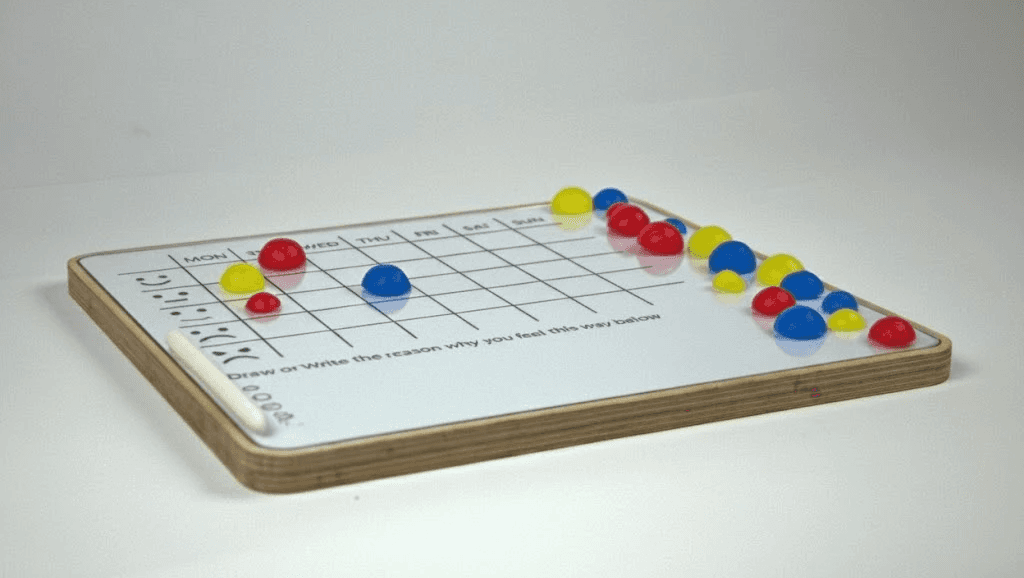
Dizzy Days is an interactive emotional diary system for children aged 6–10, rooted in Cognitive Behavioral Therapy (CBT) principles. An engaging emotion-tracking diary for kids that encourages emotional expression through tactile interaction and parent-child reflection, with real-world testing and positive professional feedback.
Research
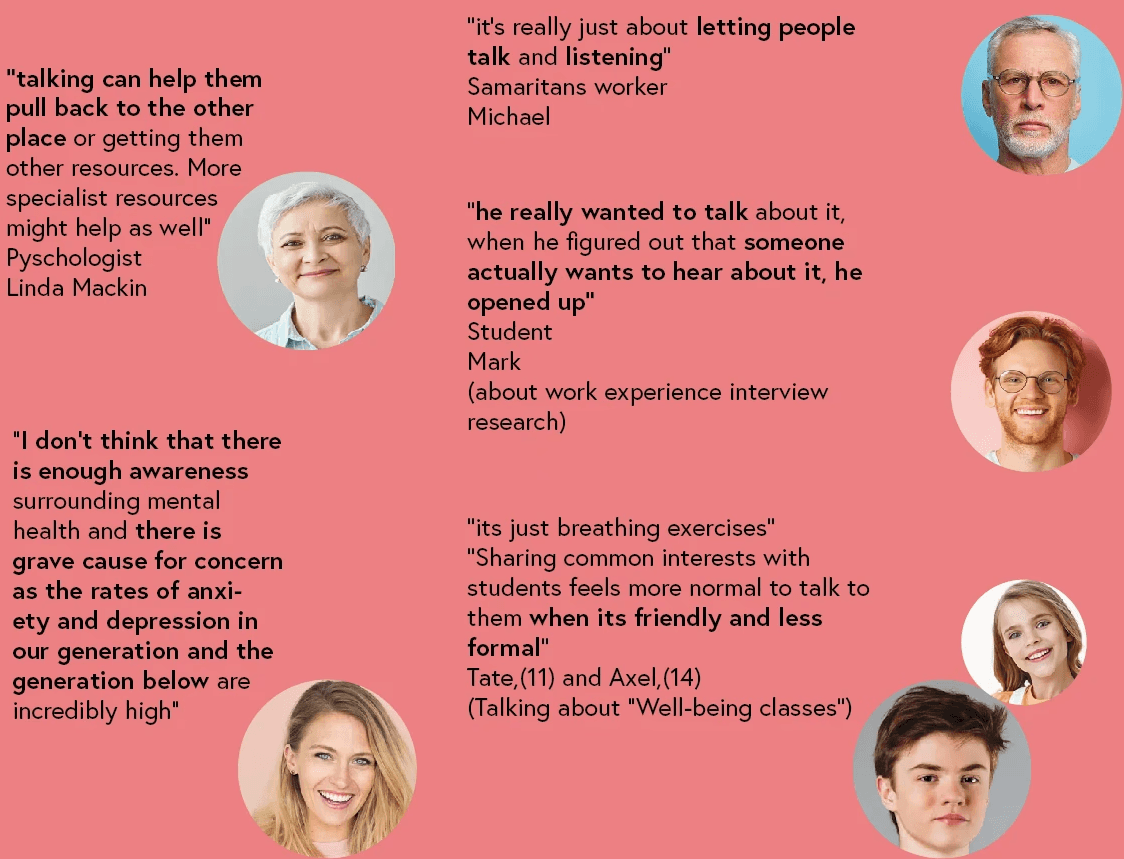
We began by exploring the broad theme of mental health, conducting interviews, mapping user flows, and reviewing existing educational resources. A clear pattern occurred.
Key Findings:
Children often struggle to label or express emotions.
Parents find it difficult to interpret children's emotional needs.
School wellbeing curriculums are inconsistent or under-resourced.
We interviewed mental health professionals, including child psychologists, conducted user testing workshops with children and parents, and worked with a primary school teacher to validate our findings. These insights revealed a critical opportunity for a child-focused emotional tool based on CBT.
Problem Statement: Children aged 6–10 struggle to label and communicate their emotions, leading to misunderstandings, emotional suppression, and potential long-term wellbeing issues.
How might we design an emotionally engaging tool that encourages children to reflect on and express their feelings, while also facilitating parental support?
Ideation
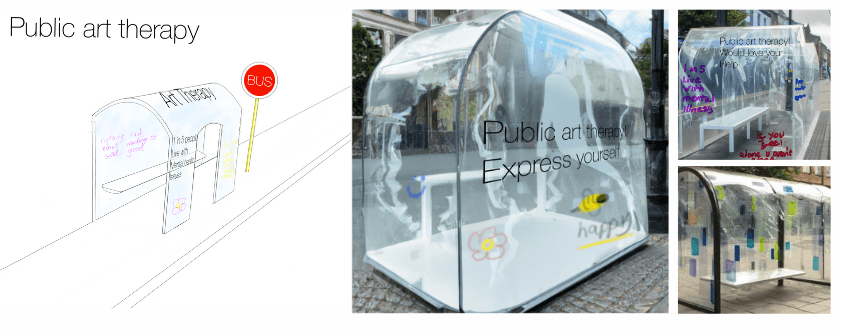
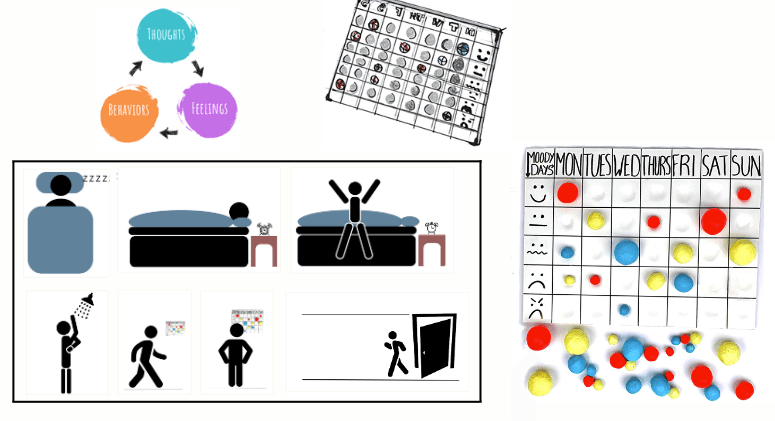
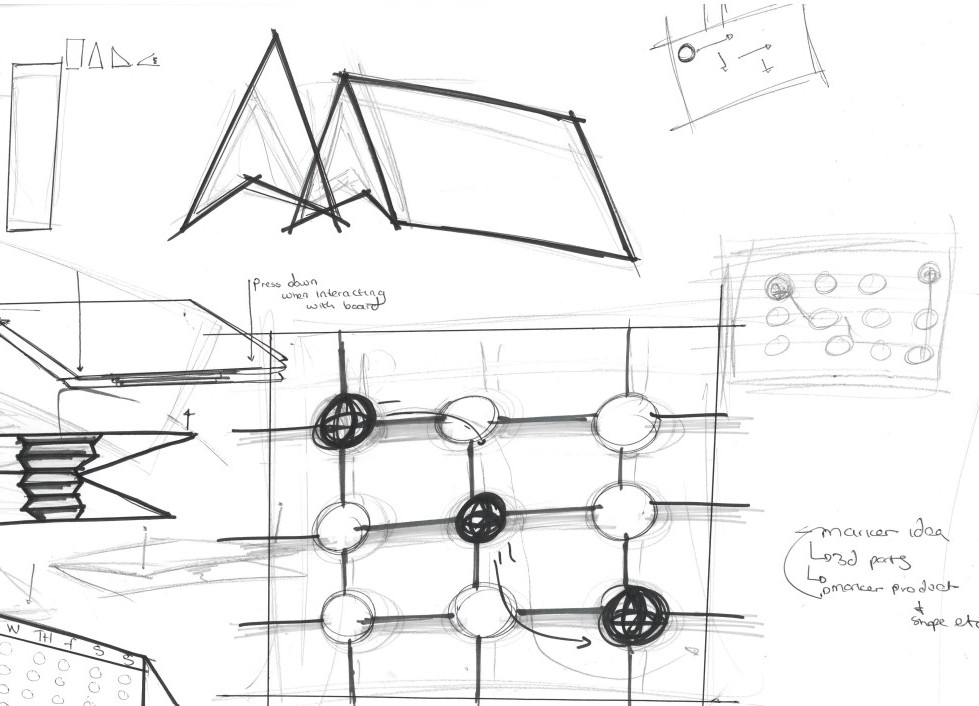
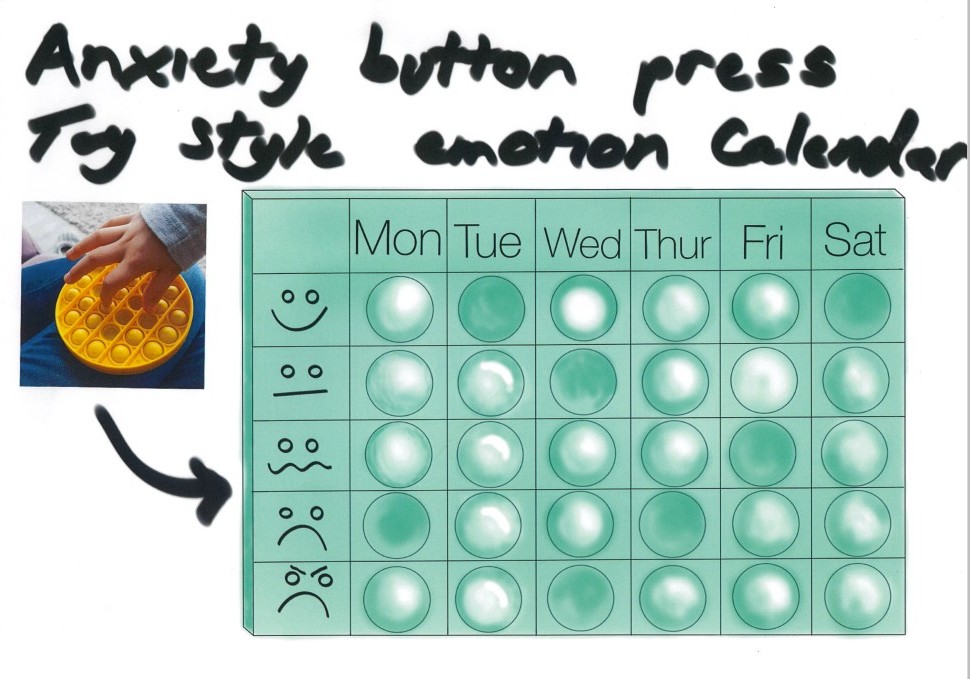
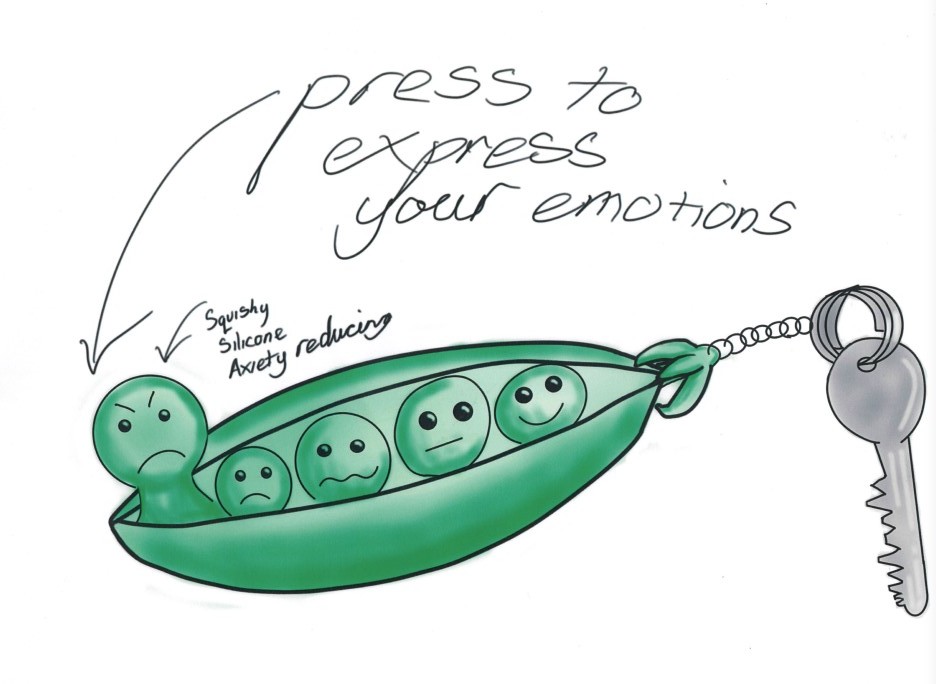
After brainstorming a wide range of concepts (using AI image generation to quickly visualize ideas), we decided to pursue a weekly interactive board system.
This concept stood out because:
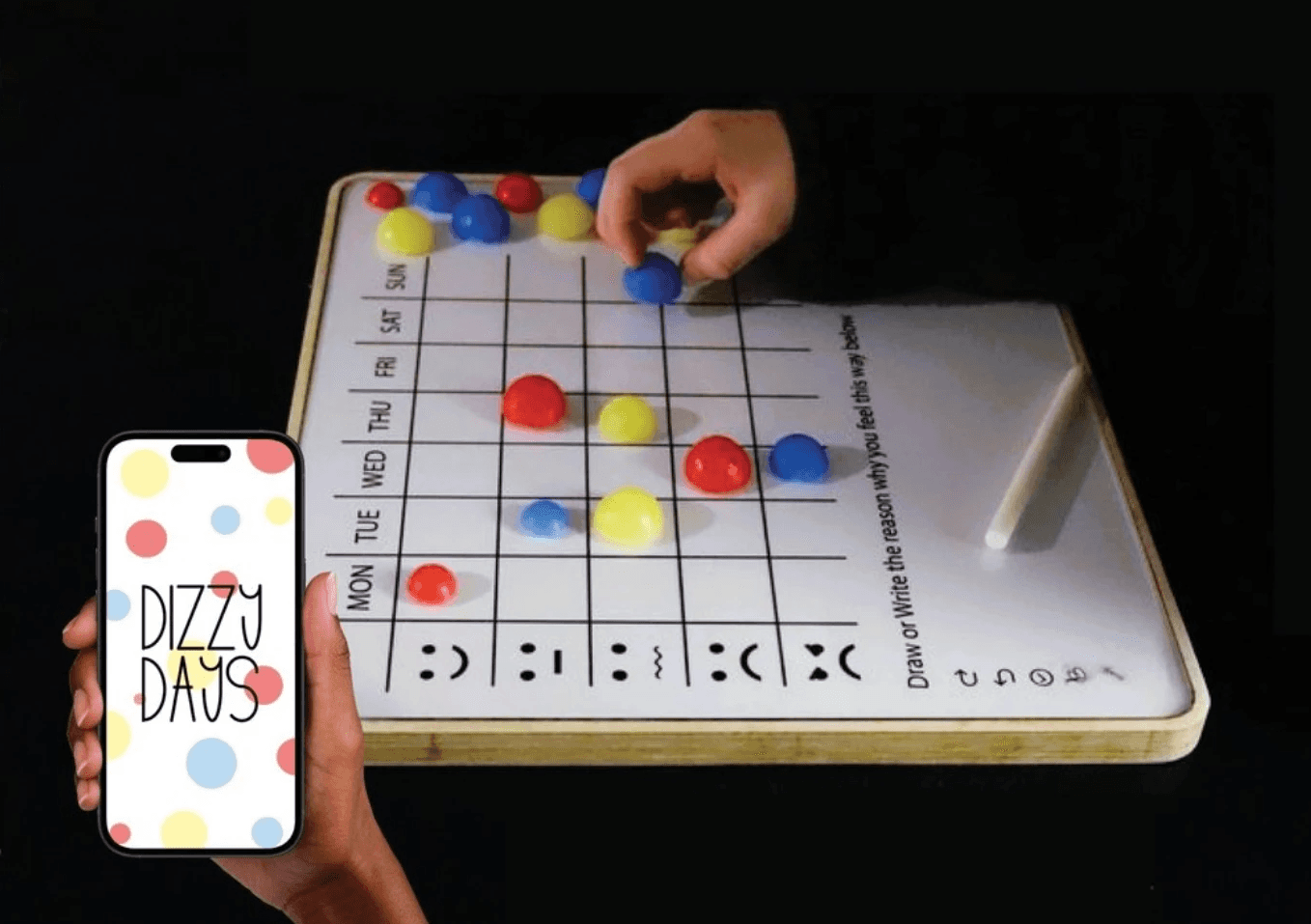
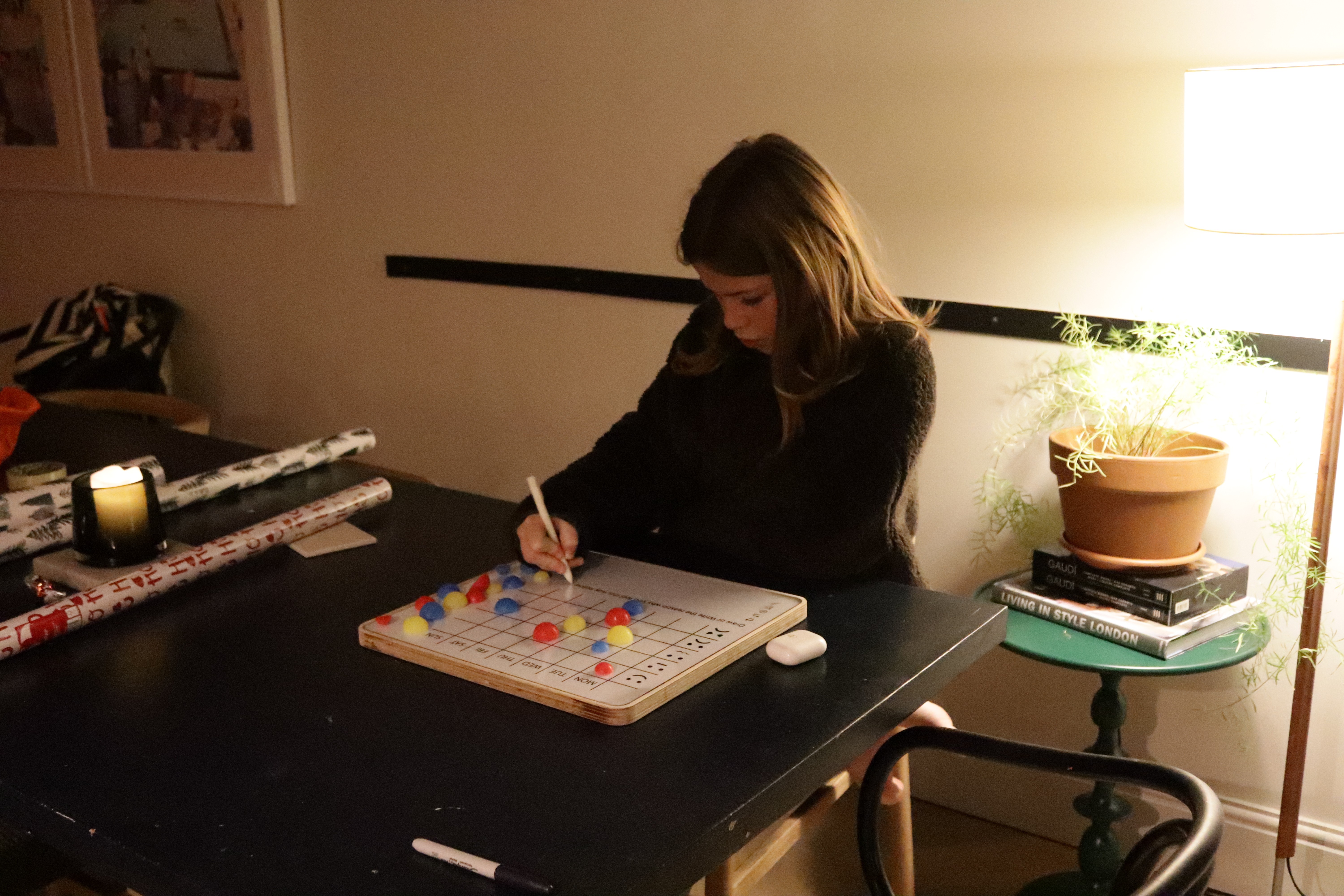
It used physical interaction (placing “emotion balls”) to promote daily reflection.
It could be paired with an app for parent insights.
It allowed space for children to draw or write about their feelings, helping them process emotions.
We intentionally designed for multi-generational engagement, ensuring accessibility for both children and caregivers.
Process
I followed an iterative, human-centred design approach:
Primary and secondary research including competitor audit.
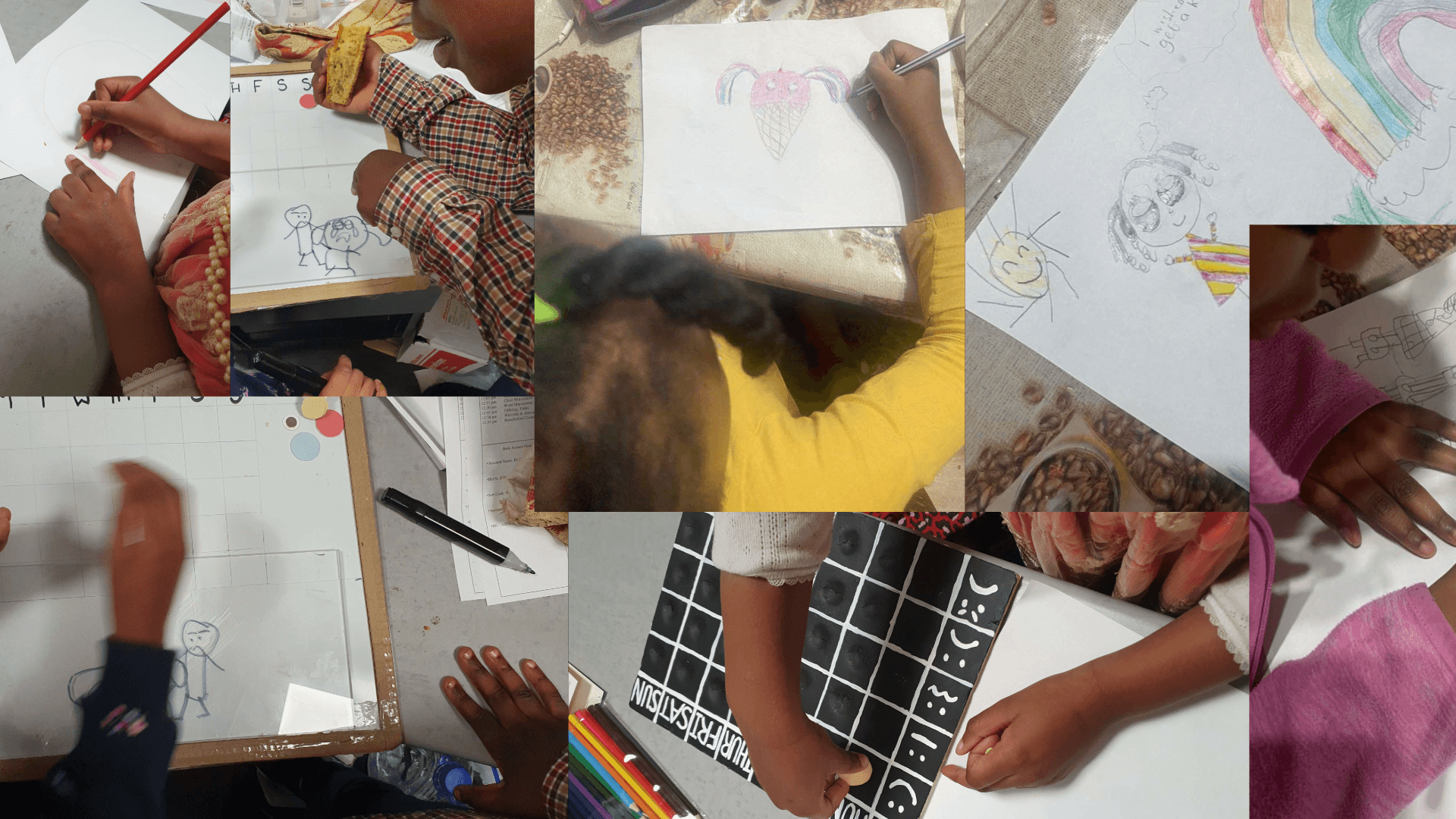
Initial Prototyping: We tested a basic chalkboard-style version to map user interaction and evaluate initial appeal.
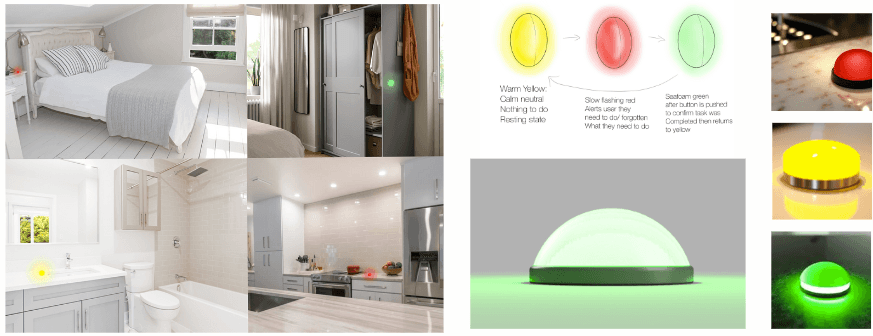
User Testing: Workshops revealed that material choice, color, and feedback (e.g. glowing balls) were essential to keep children engaged.
Parent-Centric Design: We worked closely with guardians to design an experience that was non-intrusive, yet insightful.
Expert Feedback: A therapist collaborated with us throughout the project to ensure alignment with CBT-based practices.
This iterative process informed every decision, from interaction flows to iconography to the emotional tone of the language
Development
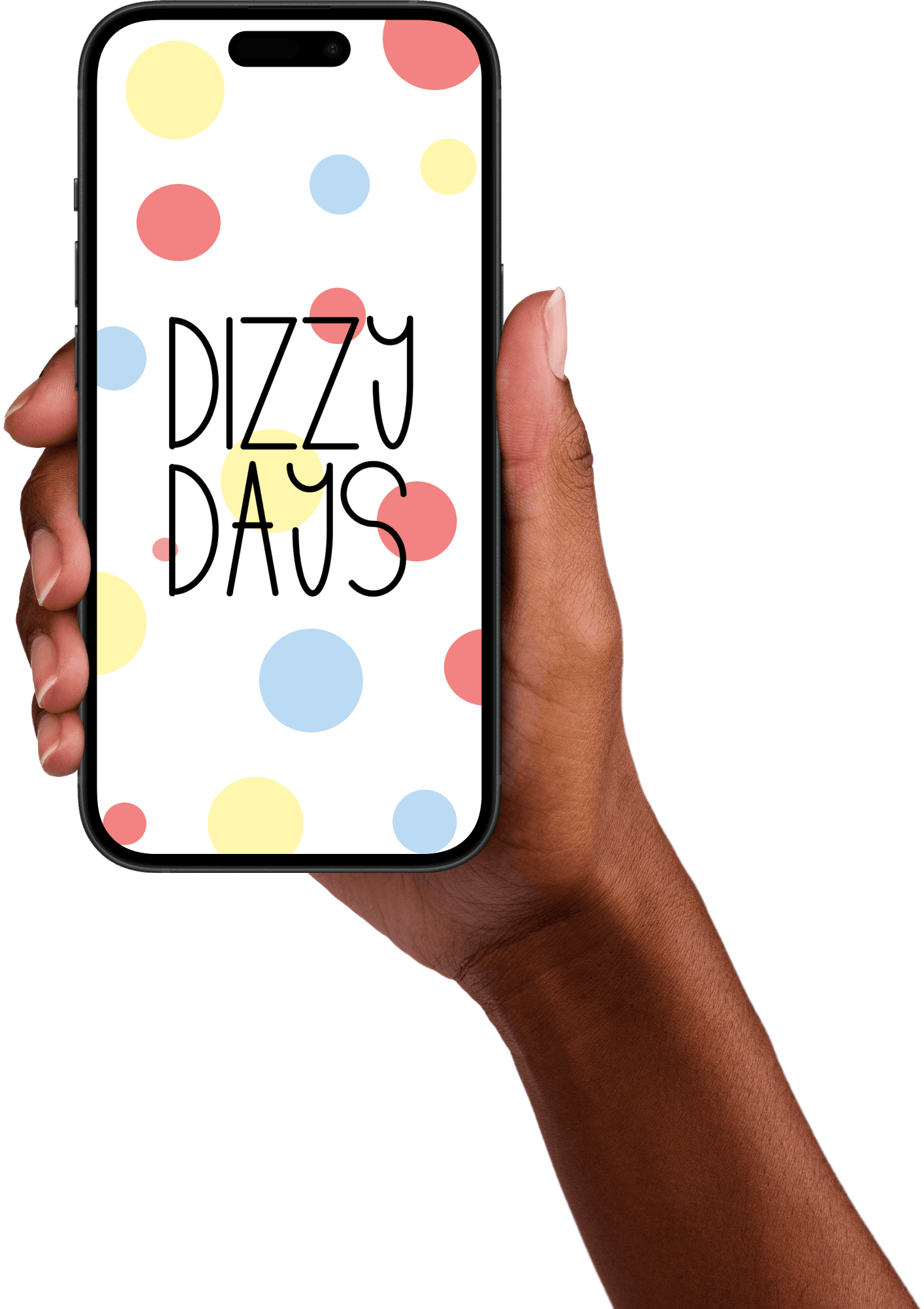
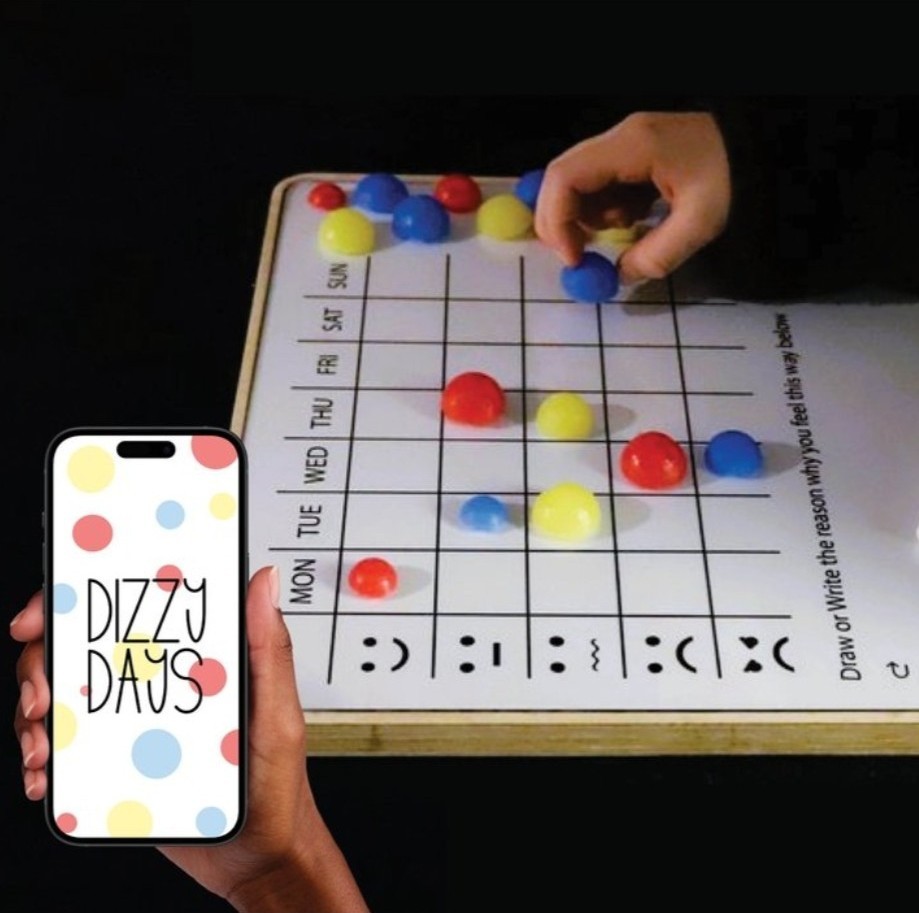
We developed both a physical board and a mobile app.
Key features include:
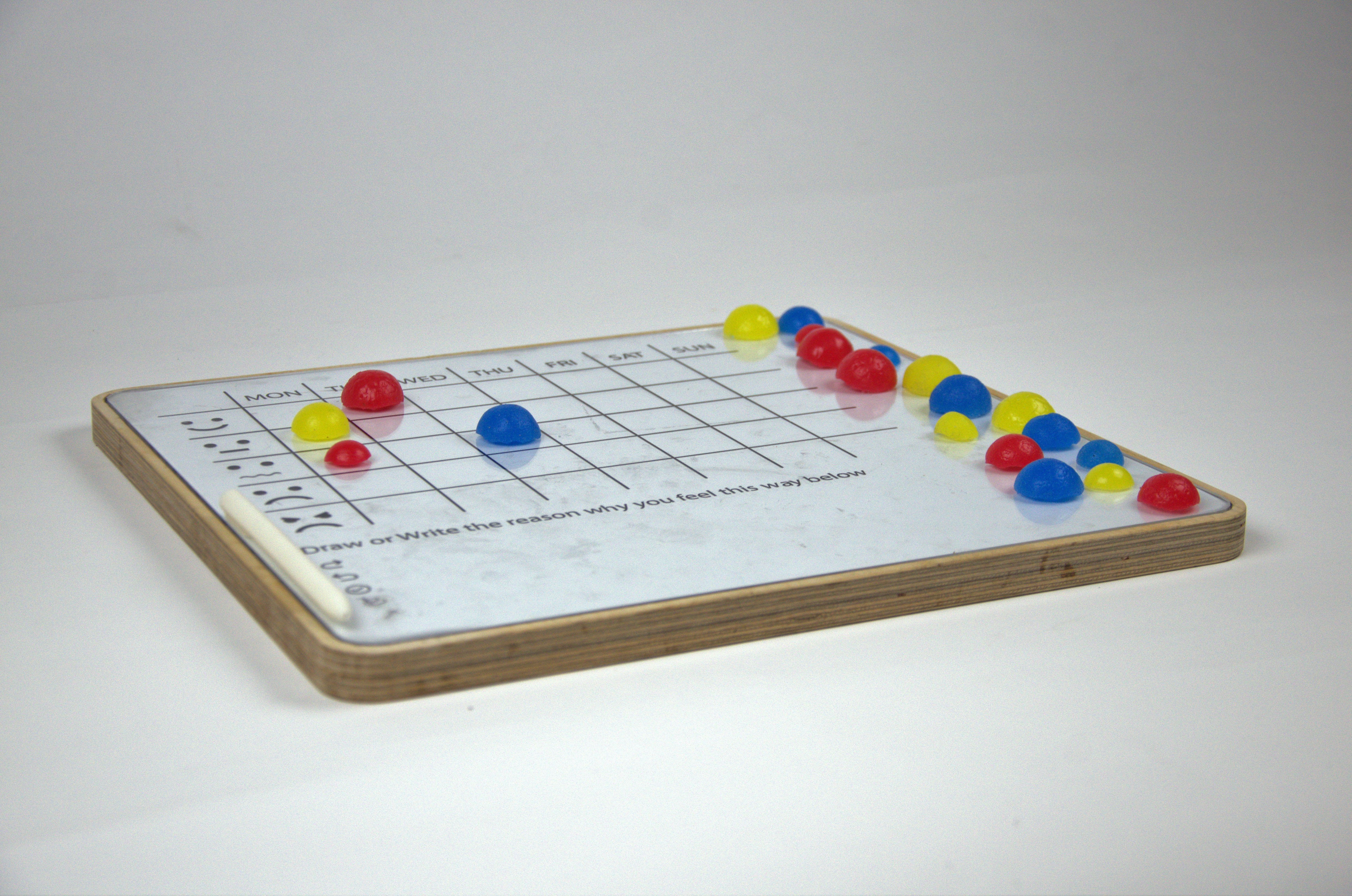
The physical build was carefully designed to be:
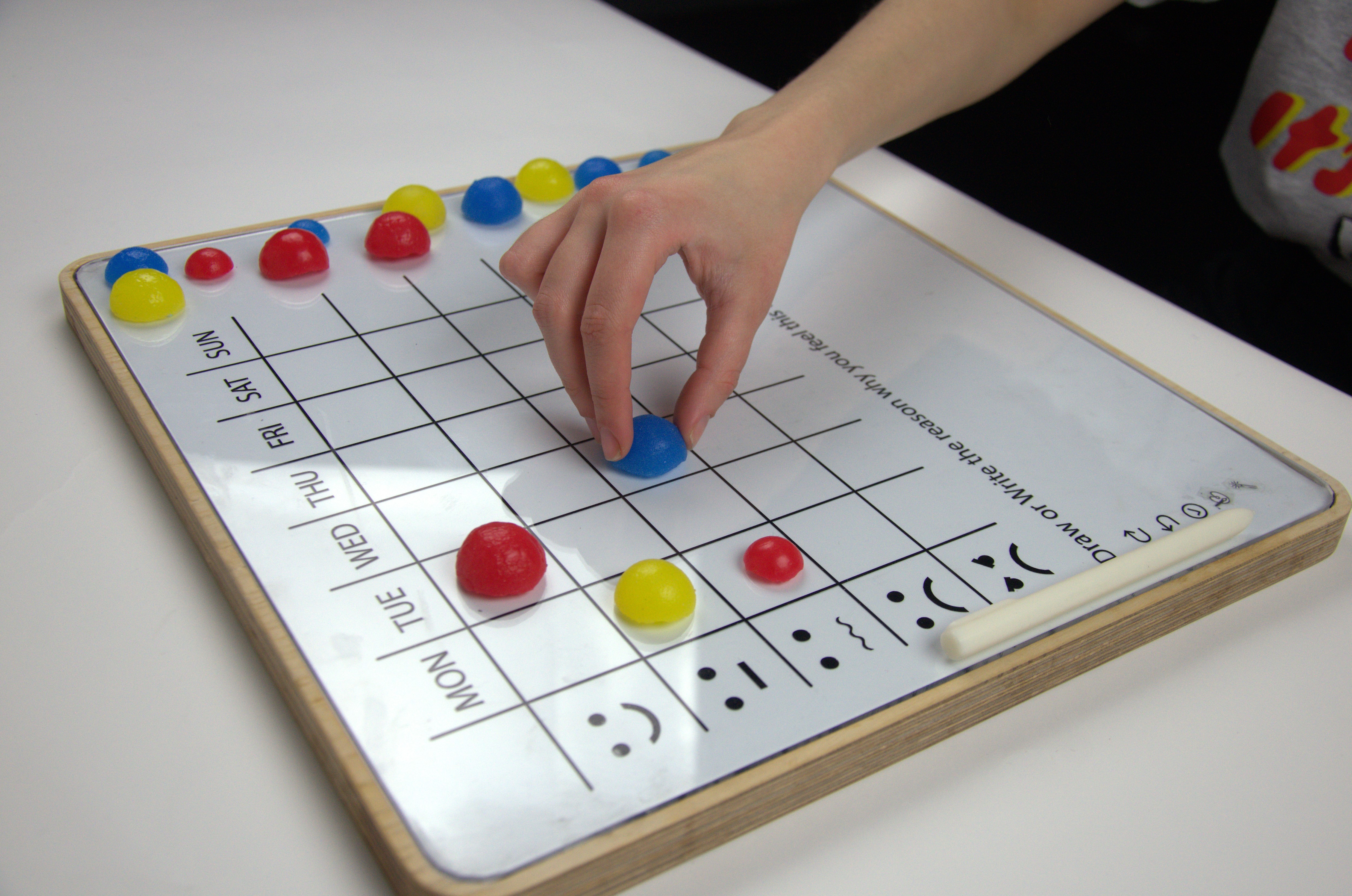
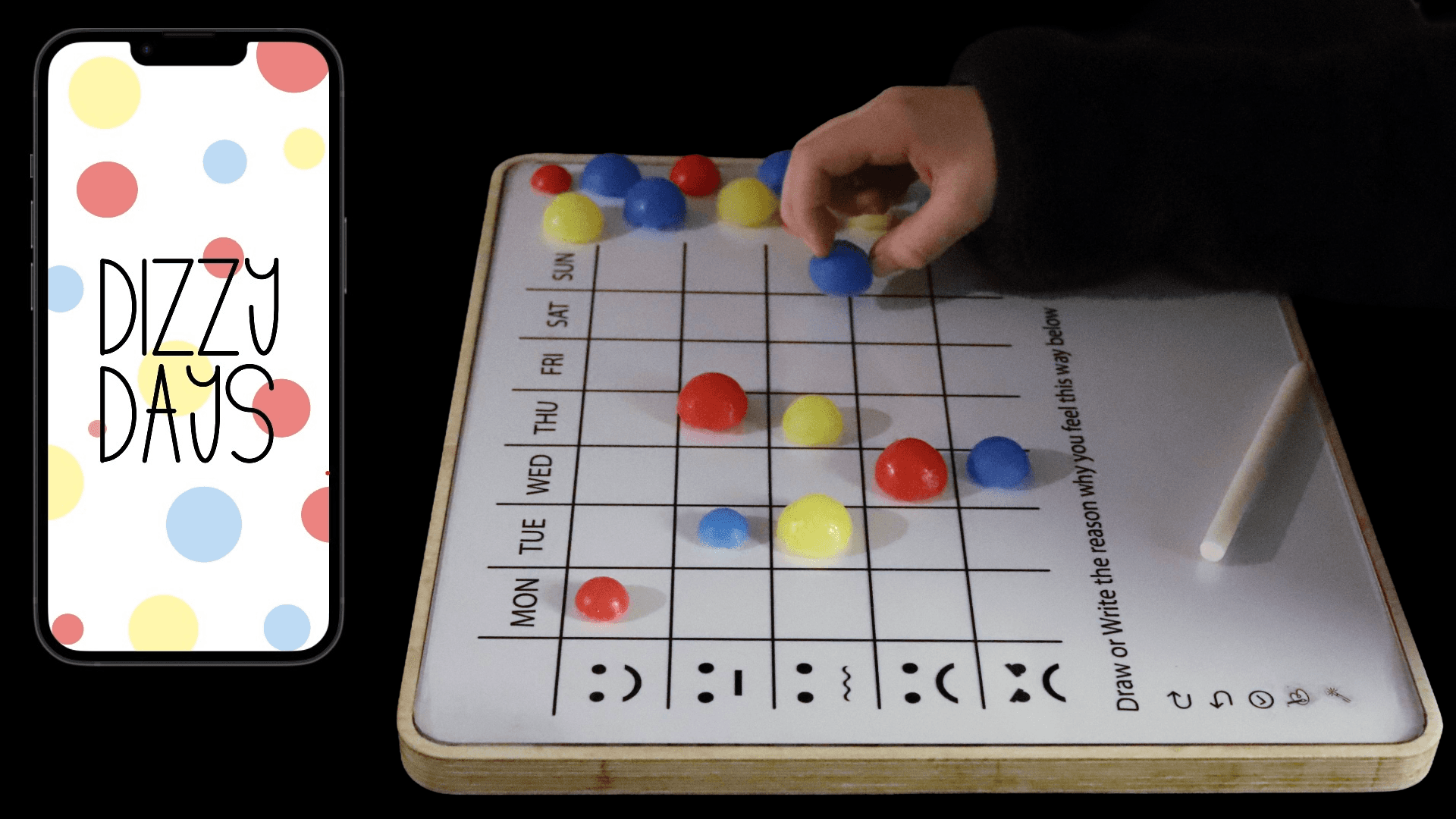
A glowing ball system children use to log daily emotions.
A drawing/writing space to externalize feelings.
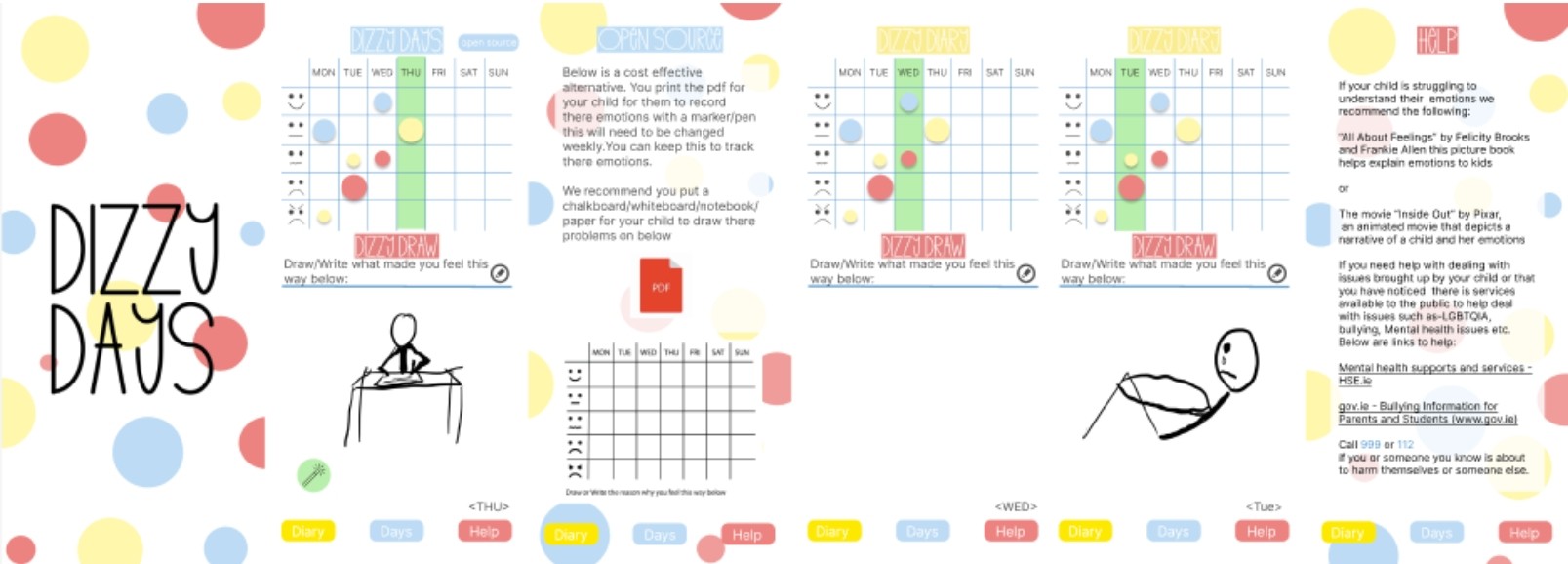
A companion app that allows guardians to monitor emotional patterns and access support resources.
An open-source, printable version for accessibility and democratized use in schools and homes.
Prototypes were tested with children of different ages. The optimal age group identified was 6–10 years, based on developmental suitability and feedback.
Outcome + Impact
Dizzy Days empowers children to reflect on their emotions in a fun, safe, and expressive way.
The child selects and places 1–3 emotion balls on the board.
The board glows in response, reinforcing emotional validation.
The child then draws or writes the reason for those emotions.
Parents receive this data via a synced app, along with pattern recognition and emotional insight.
“They get a chance to record how they feel, so they get a chance to reflect...Really helpful for kids to realize that they have a whole range of feelings and also realize they have a little bit of influence over changing those feelings.”
Linda Psychologist
Reflection
Future Iterations: The Digital Extension
The physical and printable versions successfully prioritized low-tech, screen-free engagement. However, to better accommodate larger families and schools, I am currently designing a digital tablet experience.
Key Capabilities Under Development:
Multi-Child Connectivity: Syncs multiple child profiles into a unified guardian interface.
Privacy Features: Introduces customizable privacy controls (e.g., hidden or private boards for older children).
Rapid Prototyping: Utilizing Figma and rapid AI tools to quickly test tablet-specific interaction flows and UI variants.

Mind Mentor: Dizzy Days
Overview:
Dizzy Days is an interactive emotional diary system for children aged 6–10, rooted in Cognitive Behavioral Therapy (CBT) principles. An engaging emotion-tracking diary for kids that encourages emotional expression through tactile interaction and parent-child reflection, with real-world testing and positive professional feedback.
Research
We began by exploring the broad theme of mental health, conducting interviews, mapping user flows, and reviewing existing educational resources. A clear pattern occurred.
Key Findings:
Children often struggle to label or express emotions.
Parents find it difficult to interpret children's emotional needs.
School wellbeing curriculums are inconsistent or under-resourced.
We interviewed mental health professionals, including child psychologists, conducted user testing workshops with children and parents, and worked with a primary school teacher to validate our findings. These insights revealed a critical opportunity for a child-focused emotional tool based on CBT.
Problem Statement: Children aged 6–10 struggle to label and communicate their emotions, leading to misunderstandings, emotional suppression, and potential long-term wellbeing issues.
How might we design an emotionally engaging tool that encourages children to reflect on and express their feelings, while also facilitating parental support?
Ideation
After brainstorming a wide range of concepts (using AI image generation to quickly visualize ideas), we decided to pursue a weekly interactive board system.
This concept stood out because:
It used physical interaction (placing “emotion balls”) to promote daily reflection.
It could be paired with an app for parent insights.
It allowed space for children to draw or write about their feelings, helping them process emotions.
We intentionally designed for multi-generational engagement, ensuring accessibility for both children and caregivers.
Process
I followed an iterative, human-centred design approach:
Primary and secondary research including competitor audit.
Initial Prototyping: We tested a basic chalkboard-style version to map user interaction and evaluate initial appeal.
User Testing: Workshops revealed that material choice, color, and feedback (e.g. glowing balls) were essential to keep children engaged.
Parent-Centric Design: We worked closely with guardians to design an experience that was non-intrusive, yet insightful.
Expert Feedback: A therapist collaborated with us throughout the project to ensure alignment with CBT-based practices.
This iterative process informed every decision, from interaction flows to iconography to the emotional tone of the language
Development
We developed both a physical board and a mobile app.
Key features include:
The physical build was carefully designed to be:
A glowing ball system children use to log daily emotions.
A drawing/writing space to externalize feelings.
A companion app that allows guardians to monitor emotional patterns and access support resources.
An open-source, printable version for accessibility and democratized use in schools and homes.
Prototypes were tested with children of different ages. The optimal age group identified was 6–10 years, based on developmental suitability and feedback.
Outcome + Impact
Dizzy Days empowers children to reflect on their emotions in a fun, safe, and expressive way.
The child selects and places 1–3 emotion balls on the board.
The board glows in response, reinforcing emotional validation.
The child then draws or writes the reason for those emotions.
Parents receive this data via a synced app, along with pattern recognition and emotional insight.
“They get a chance to record how they feel, so they get a chance to reflect...Really helpful for kids to realize that they have a whole range of feelings and also realize they have a little bit of influence over changing those feelings.”
Linda Psychologist
Reflection
Future Iterations: The Digital Extension
The physical and printable versions successfully prioritized low-tech, screen-free engagement. However, to better accommodate larger families and schools, I am currently designing a digital tablet experience.
Key Capabilities Under Development:
Multi-Child Connectivity: Syncs multiple child profiles into a unified guardian interface.
Privacy Features: Introduces customizable privacy controls (e.g., hidden or private boards for older children).
Rapid Prototyping: Utilizing Figma and rapid AI tools to quickly test tablet-specific interaction flows and UI variants.